+ Create post

Most valuable companies 1989–2026: an interactive history

Explore 37 years of the world’s most valuable companies. Scroll the timeline, jump to the events that changed markets, or press play to watch the top 15 trade places. Which change surprised you most? 31 May 1989–9 September 2026. Values are nominal US dollars. Public companies use market capitalization; private companies use disclosed funding or secondary-sale valuations. Historical gaps include estimates; animation between observations is interpolated. This interactive uses the same underlying

Loading timeline…

Open full post →

9
0

Top car brands by production 1960–2026

Explore the history of car production from 1960 to 2026. Drag the timeline, choose a year or press play to watch the top 20 change places. Open the historical events for iconic launches, racing victories and turning points in the industry. This is the interactive companion to our “Top Car Brands by Production 1960–2026” video. From the Mustang and the Corolla to Le Mans, Senna and Hamilton, discover the stories alongside the numbers. Which car or moment would you add? Watch video About the data:

Loading timeline…

Open full post →

7
1

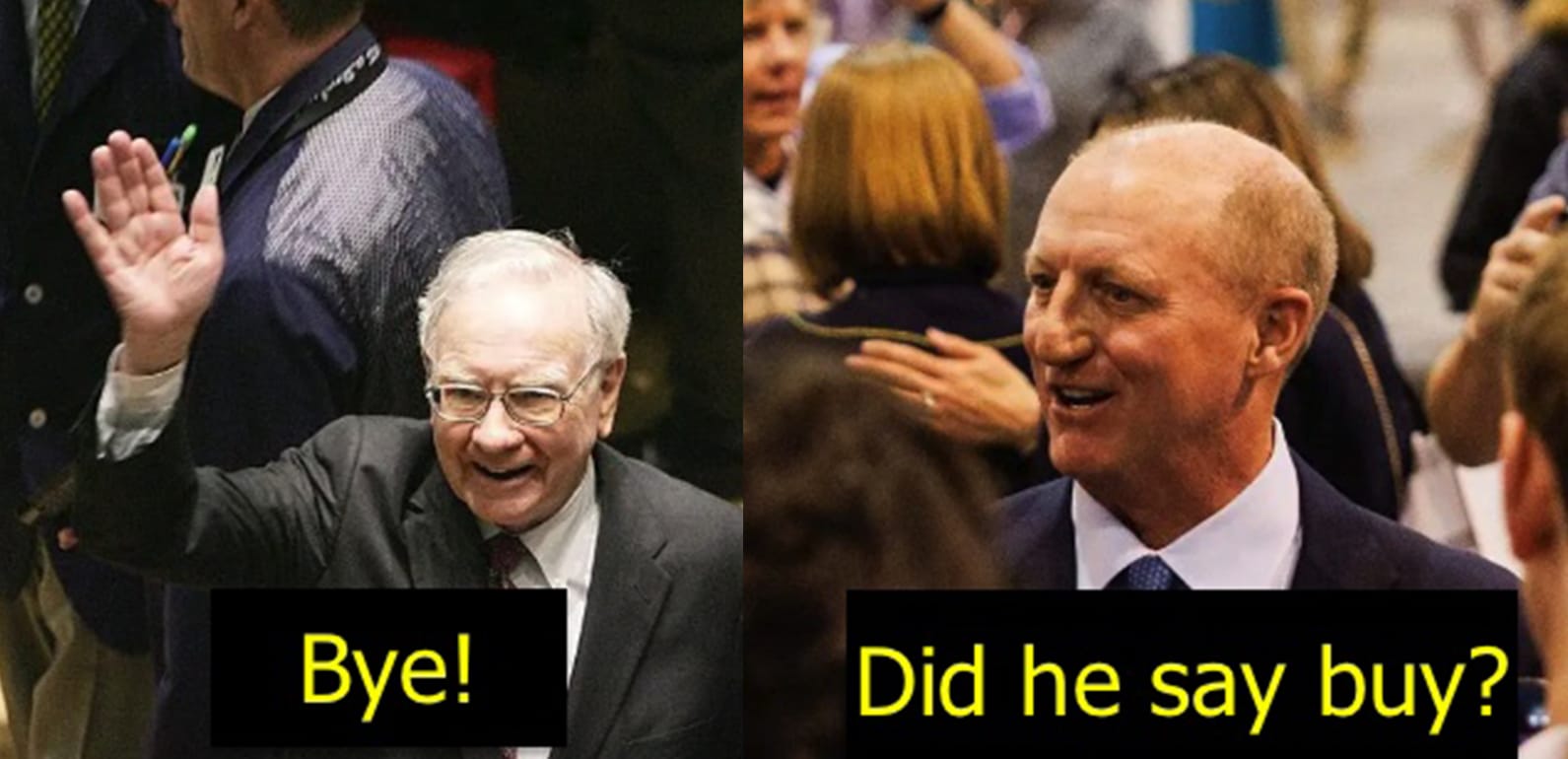
Berkshire finally spending cash? Or just spending the interest?

Every time Berkshire does something with its cash, the internet acts like Buffett or Abel finally hit the buy button after years of sitting in T-bills. But if the cash pile is earning a decent yield, they can spend the interest and still keep most of the optionality. That's less dramatic, but probably closer to how a giant balance sheet actually works. So what are we supposed to read into it? Are they seeing better opportunities, getting more aggressive, or just using cash flow that was already

Capital allocation meme
7
1

Nike feels like it lost the default setting

I keep noticing this... Nike used to be the answer when you needed sneakers or gym clothes. Now it feels like people are mixing Lululemon, Hoka, On, New Balance, Vuori, whatever. Maybe I'm just seeing my own bubble, but the brand doesn't feel as automatic as it did 10 years ago. And the fix seems to be more collabs, more limited drops, higher prices. That can make the brand look hot for a minute, but it doesn't solve “do people actually want the product?” For $NKE, what matters more right now: p

6
0

Is $ASO a real value setup, or are we just calling a falling retailer cheap?

I keep coming back to $ASO because it looks cheap for reasons that might be temporary — but “looks cheap” is also how a lot of value traps start. The basic setup is pretty simple. Academy Sports & Outdoors has been hit hard, the stock is trading around 6–7x forward earnings, and the market seems to be treating the post-COVID sales normalization as proof that the business is in permanent decline. Maybe that is right. But there are a few things that make the bear case less obvious than the multipl

5
0

AI revenue going to $200B by 2028... are we just making numbers up now?

Apparently one of the big frontier AI labs is talking about something like $200B in 2028 revenue after being around a $47B run rate earlier this year. I get the bull case. Every company wants this stuff, adoption is going nuts, etc. But 4x in two years is a huge jump, especially when models keep getting cheaper and the competition is everywhere. The part I can't get past is margins. Who actually keeps the money? The model company, the cloud provider, or the chip guys? If the price per token keep

5
0

Are we ignoring everything that isn't AI?

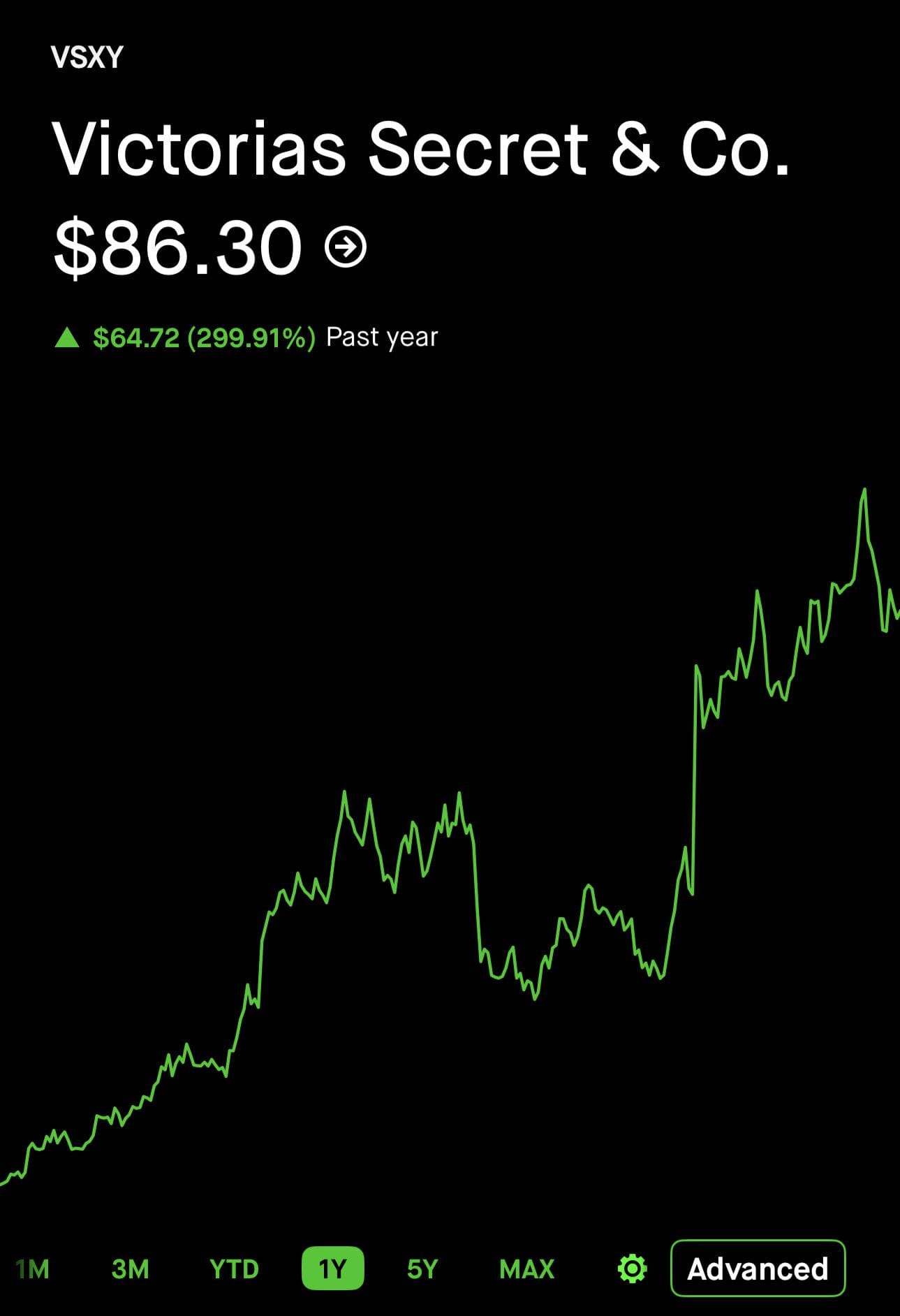
Maybe AI is the right place to be. But it has become so easy to explain: AI demand goes up, buy the bottleneck, repeat. Meanwhile there are a bunch of boring consumer businesses where actual people are still changing what they buy. $VSCO, restaurants, gyms, beauty, discount retail, etc. Those stories are messier, so they get less attention. The problem is it's much harder to do the work. You have to figure out the customer, brand, competition, margins, and whether one good quarter is just noise.

Consumer market illustration
4
0

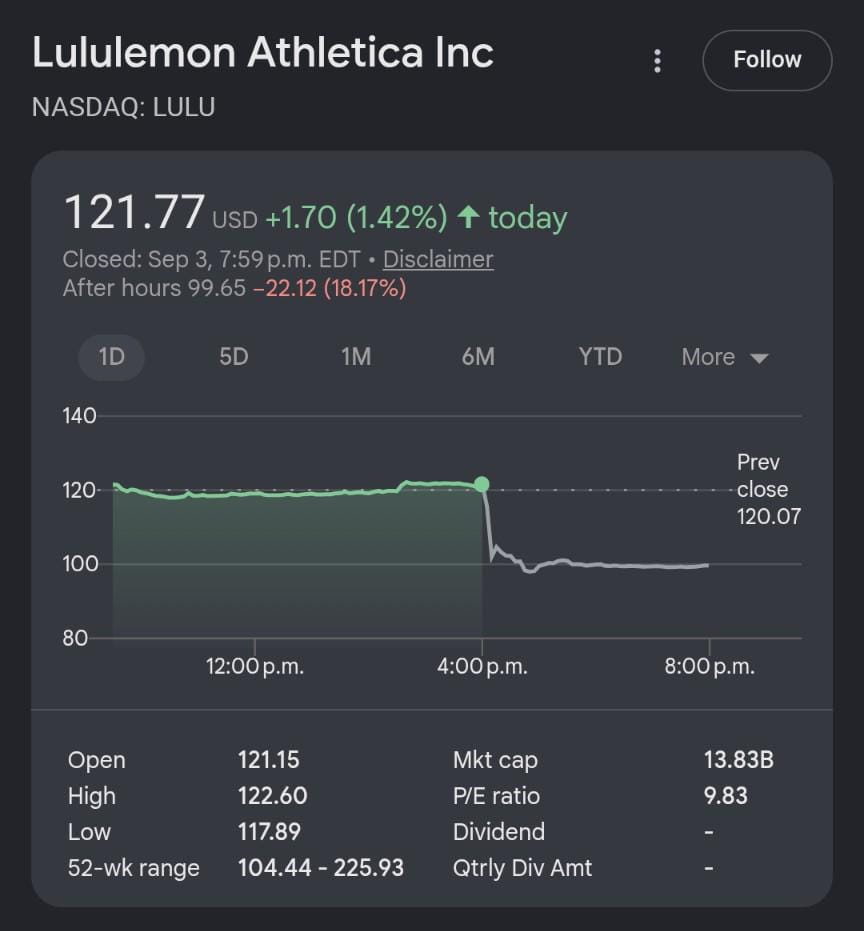
Can $LULU fix a rough quarter by adding AI to leggings?

$LULU has had a rough stretch and apparently the obvious fix is to announce an AI division. LuluAI. Large Legging Model. It scans your fit, predicts your squat form, and tells you whether the pants are going to survive the quarter. Maybe they put a data center in every store and call the power bill innovation. Honestly, the market would probably reward it for 48 hours. What is the most ridiculous “AI pivot” you have seen a company try?

LULU AI meme
3
0

EBITDA vs. Net Income: What Each Measures—and What Both Miss

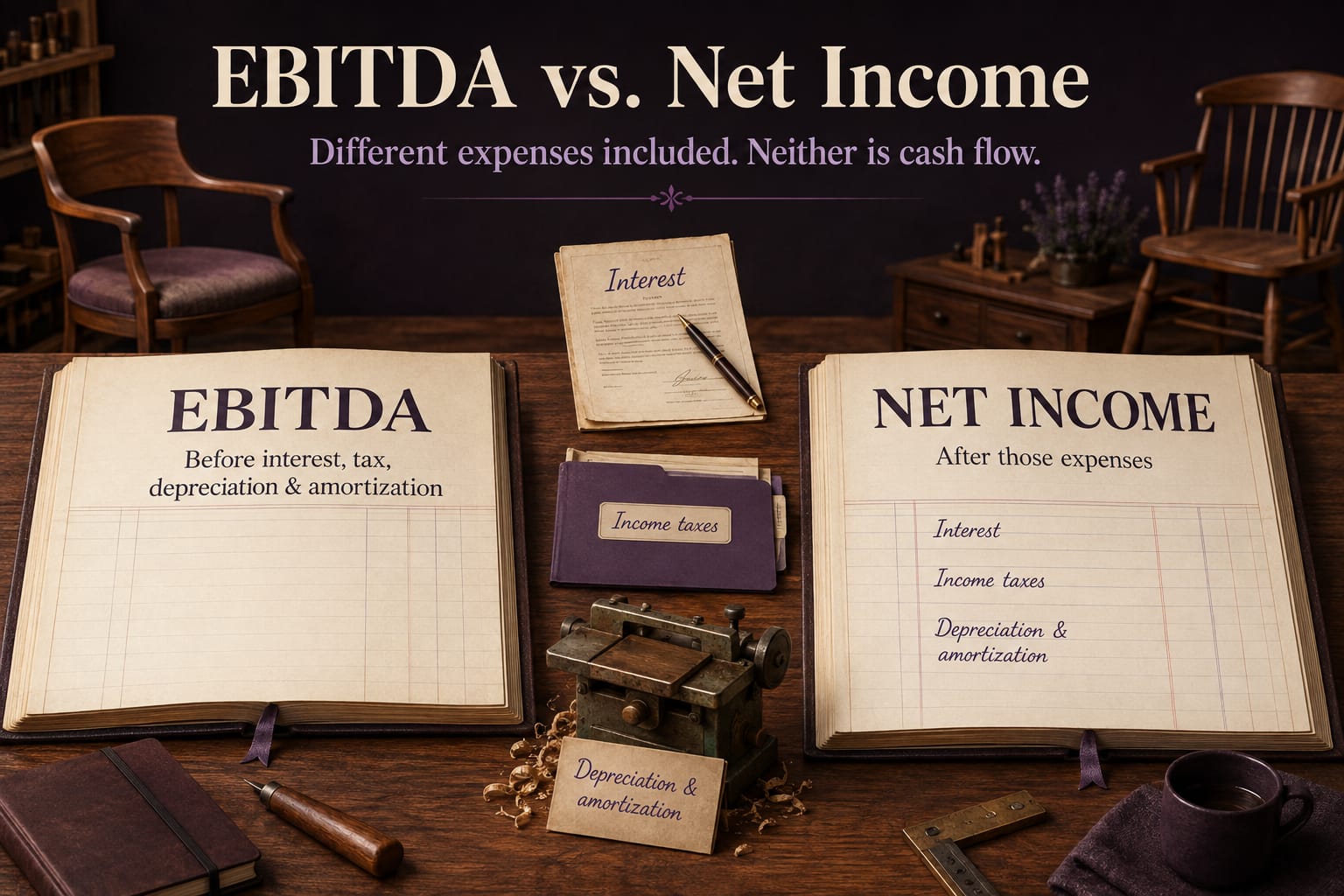
EBITDA measures earnings before interest, income taxes, depreciation, and amortization. Net income measures accounting profit after those items. The difference is which costs remain in the calculation—not which number represents cash. EBITDA can help compare businesses before certain financing and accounting effects; net income shows the resulting bottom-line profit or loss. Neither replaces a cash flow statement. 1 2 The most useful question is not “Which number is better?” It is “What explains

Two accounting ledgers show EBITDA before interest, income taxes, depreciation and amortization, and net income after those expenses.
1
0

Basic vs. Diluted EPS: Formulas, Examples, and What Investors Should Use

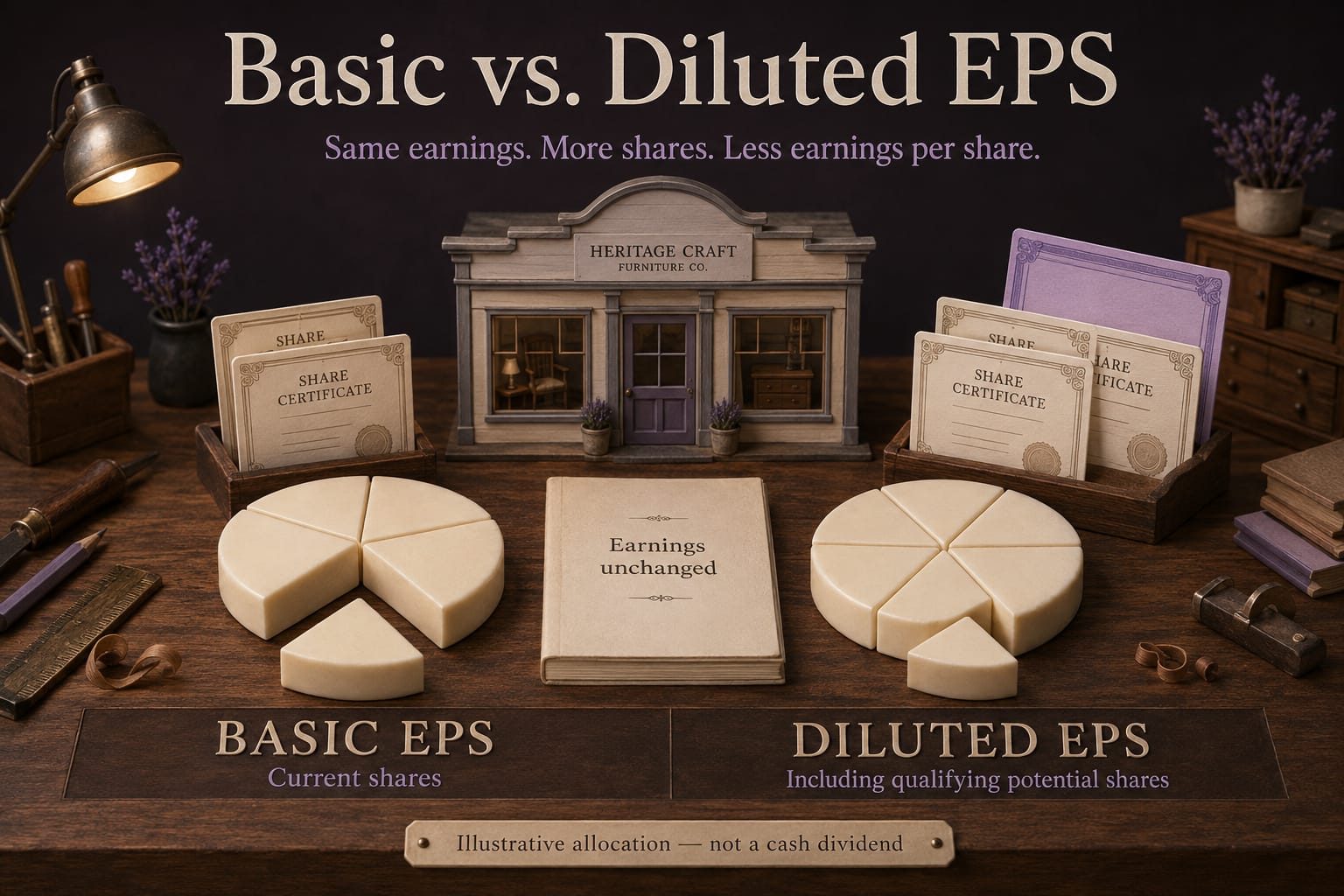
Basic earnings per share (EPS) divides earnings available to common shareholders by weighted-average common shares outstanding. Diluted EPS includes qualifying potential common shares and adjusts earnings when required. Both describe a reporting period—not a forecast of future earnings or every share that might eventually be issued. 1 4 For an initial stock analysis, start with reported diluted EPS, then use basic EPS and the share-count reconciliation to understand the difference. This guide fo

Basic and diluted EPS illustrated as the same accounting earnings allocated across current and qualifying potential shares.
1
0

Free Cash Flow vs. Net Income: Differences, Formulas, and Examples

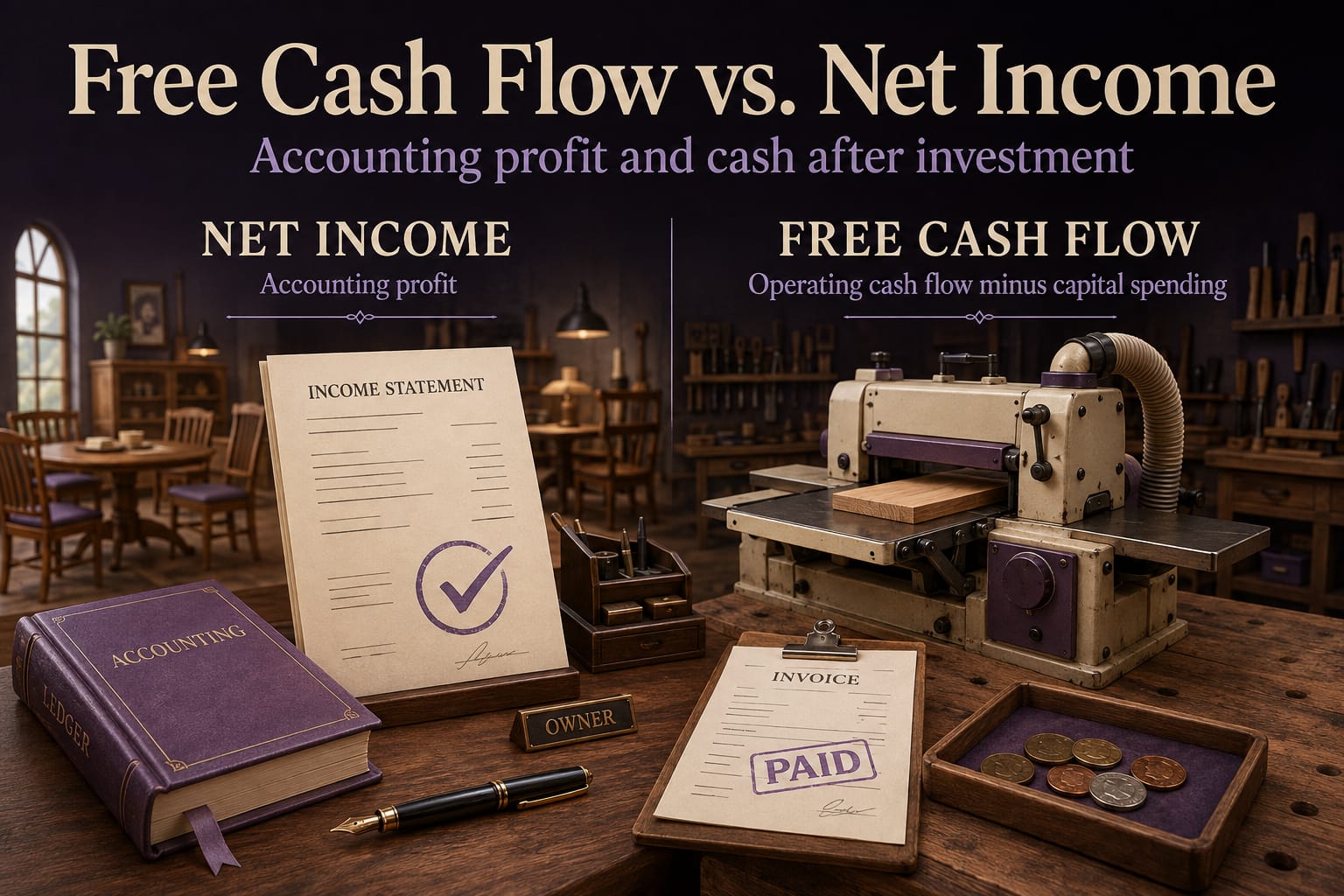
Net income measures accounting profit. Free cash flow measures operating cash flow after capital expenditures, using the definition in this guide. They answer different questions: whether a company reported a profit and how much operating cash remained after capital investment. A company can be profitable without generating positive free cash flow. 1 2 The useful question is not simply which number is higher. It is what explains the difference—and whether that explanation is likely to repeat. Th

Free cash flow versus net income: an income statement represents accounting profit, while equipment, a paid invoice, and remaining coins illustrate operating cash flow minus capital spending.
1
0

Procore completes $845 million DroneDeploy deal to expand construction AI

Procore Technologies ($PCOR) completed its acquisition of DroneDeploy for approximately $845 million in cash, subject to customary adjustments. DroneDeploy is now a wholly owned subsidiary, bringing aerial imaging, ground robotics and camera-based site capture into Procore’s technology portfolio. The combination supports the company’s push to connect construction records with visual evidence of what is happening on site. Procore plans to pair that imagery with its AI-powered digital coworkers, e

0
0

Procore upgrades AI task routing and simplifies access to specialized agents

Procore ($PCOR) updated the chat experience in Procore AI and Datagrid, combining simpler controls with an improved automatic mode. The system can answer straightforward questions directly, use available tools when needed and bring in specialized agents for more complex tasks. Users no longer need to switch manually between the previous Ask and Execute settings, although they can still select specific agents or name them in a request. The redesigned interface puts agent selection more prominentl

0
0

C&C acquires Asahi distribution operations as revenue softens

C&C ($CCR) agreed to acquire Asahi UK’s Nectar Imports wholesale business and direct-distribution operations for nominal consideration. The assets will be integrated into Matthew Clark Bibendum as part of a longer-term partnership involving Asahi brands. The arrangement includes customer relationships and operating assets rather than a purchase of Asahi’s wider beverage business. The accompanying trading update showed first-half net revenue down approximately 3%. Branded revenue increased 2%, wh

0
0

Nvidia reportedly weighs up to $10 billion investment in Anthropic IPO

Nvidia ($NVDA) is discussing an investment of up to $10 billion in Anthropic’s planned initial public offering, according to Reuters sources. Anthropic is considering raising as much as $100 billion at a valuation around $2 trillion, with Nvidia potentially participating as an anchor investor. The figures remain under discussion and could change. Neither a binding investment nor a completed offering has been announced. The report concerns a potential IPO investment, rather than a new chip-supply

0
0

Volkswagen union invokes talks clause over restructuring dispute

IG Metall moved to invoke a clause requiring talks with Volkswagen ($VOW3) over concerns that a newer turnaround plan could undermine the company’s existing labor agreement. The union wants management to uphold job and investment commitments made in the earlier settlement. Volkswagen said it welcomes discussions. The dispute centers on a restructuring plan involving much larger workforce reductions and possible future plant closures. Those proposals should not be read as newly completed layoffs.

0
0

Pacific Airport Group signs 8 billion pesos of bank facilities

Grupo Aeroportuario del Pacífico ($PAC) signed bank facilities totaling 8 billion Mexican pesos. Approximately 4.26 billion pesos is intended to refinance maturing bonds and existing financing, with the remaining 3.74 billion pesos supporting capital expenditure at its airports. Drawdowns are expected to be made gradually. The facilities carry terms of roughly six to 12 months, with some extension options, and a weighted interest margin of approximately 45 basis points above the relevant Mexican

0
0

Eloxx doses first patients in mid-stage Alport syndrome trial

Eloxx Pharmaceuticals ($ELOX) dosed the first two patients in its Phase 2b EXACT study of exaluren for Alport syndrome caused by nonsense mutations. The trial plans to enroll 24 patients with relevant mutations in the COL4A3, COL4A4 or COL4A5 genes and includes a randomized, placebo-controlled delayed-start design. The initial assessment runs for 16 weeks and includes kidney-biopsy measures, with additional follow-up extending to 32 weeks. Initial results are expected around the middle of 2027 a

0
0

Ball plans two-line beverage-can plant in northern India

Ball ($BALL) announced plans for a new beverage-can manufacturing facility in Uttar Pradesh, India, adding two production lines to its existing local network. Operations are expected to begin in 2029. The project complements Ball’s existing facilities at Taloja and Sri City and is supported by customer contracts. The company did not disclose the project’s total cost or a specific earnings contribution. It said the investment is consistent with its broader approach of aligning capital expenditure

0
0

L’Oréal faces Arizona lawsuit over hair-relaxer safety claims

Arizona sued L’Oréal ($OR-EURONEXT), alleging that the company concealed cancer risks associated with chemical hair relaxers. The state is seeking remedies including damages, penalties and stronger warnings. The allegations concern products already facing extensive litigation in the United States. L’Oréal disputes the claims and maintains that its products are safe, saying the case lacks scientific and legal merit. The lawsuit is an allegation, not a court finding that the products caused cancer

0
0